
AI Data Centers: Who Pays the Price?
A free public forum on what the AI build-out costs the communities that host it.
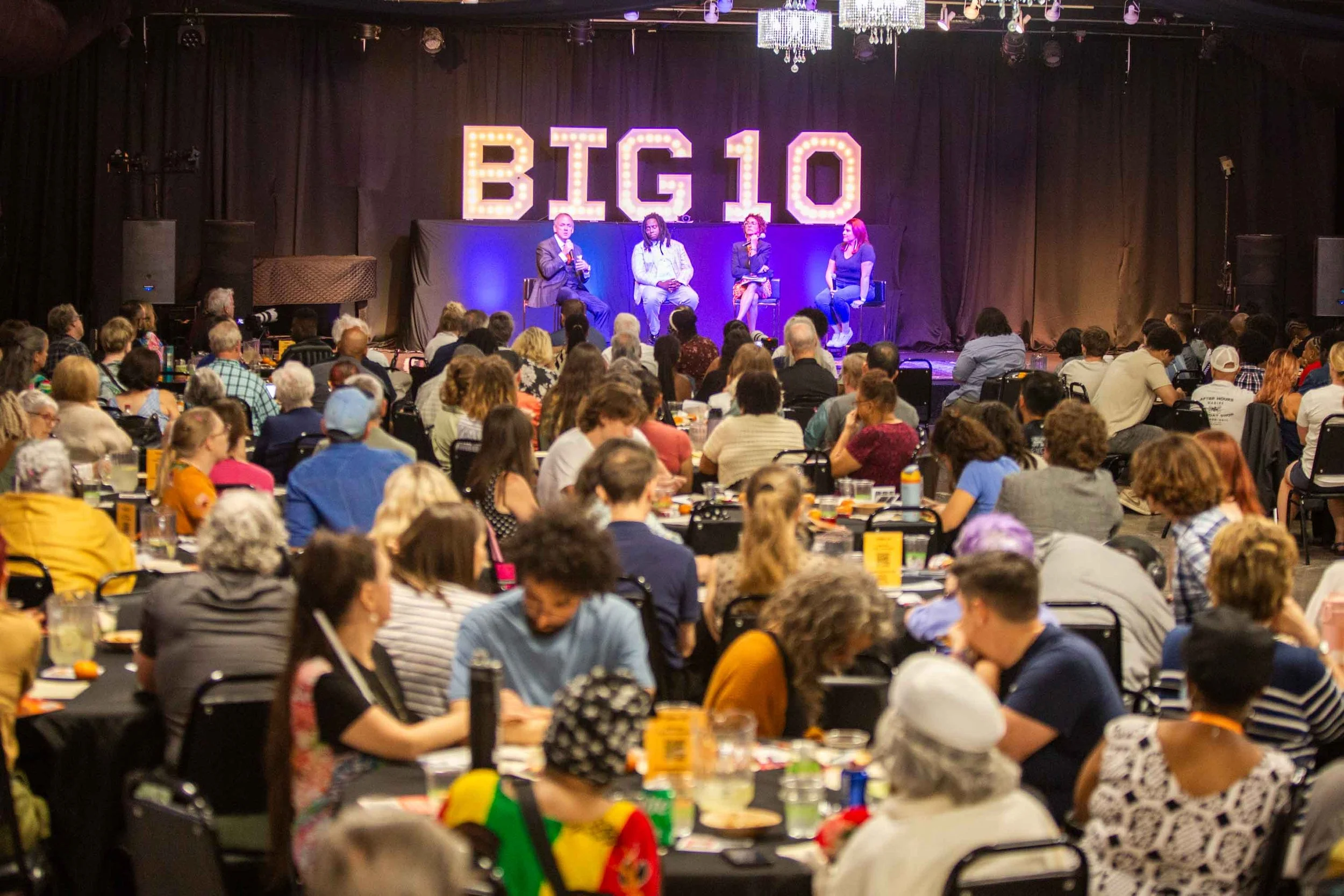
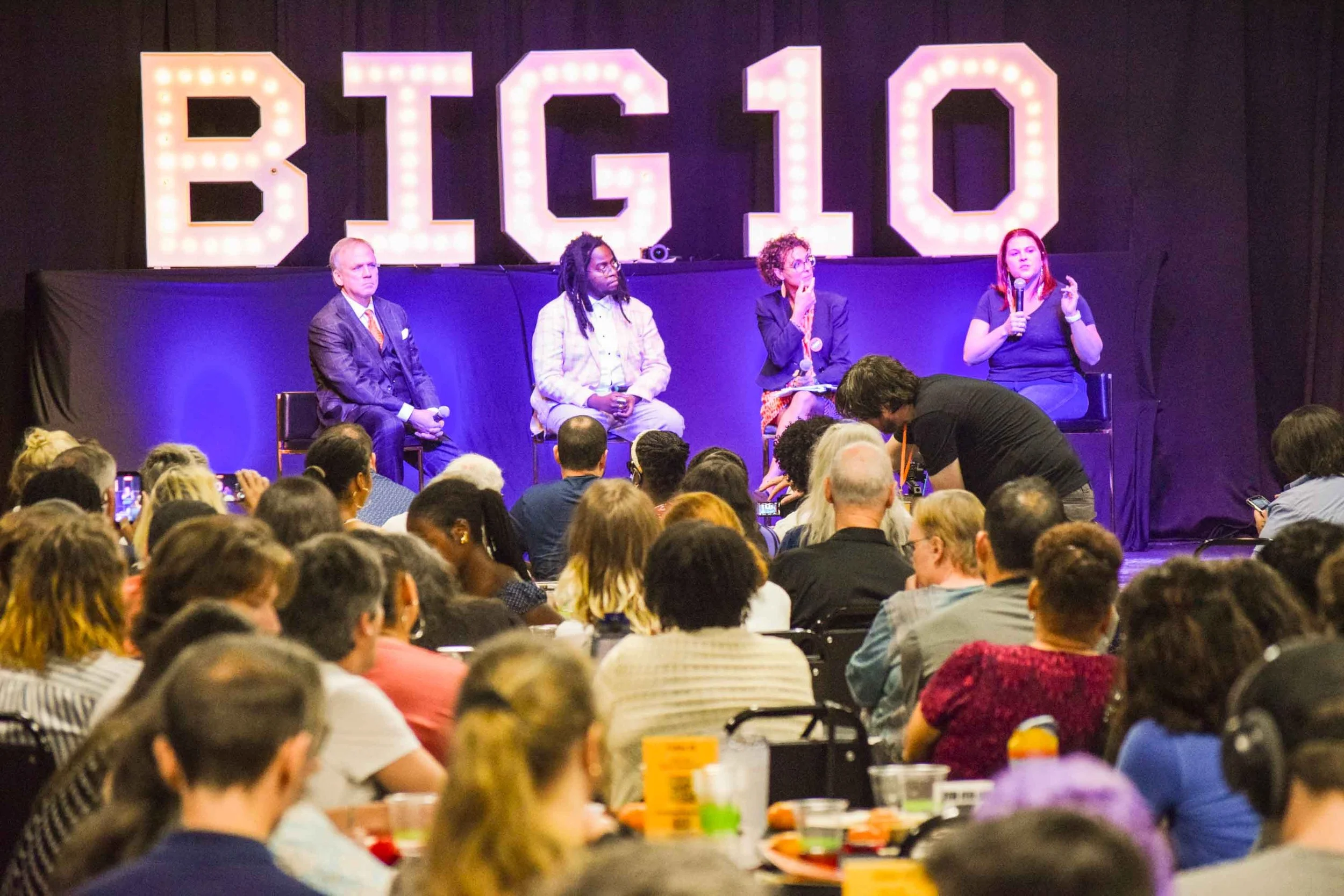
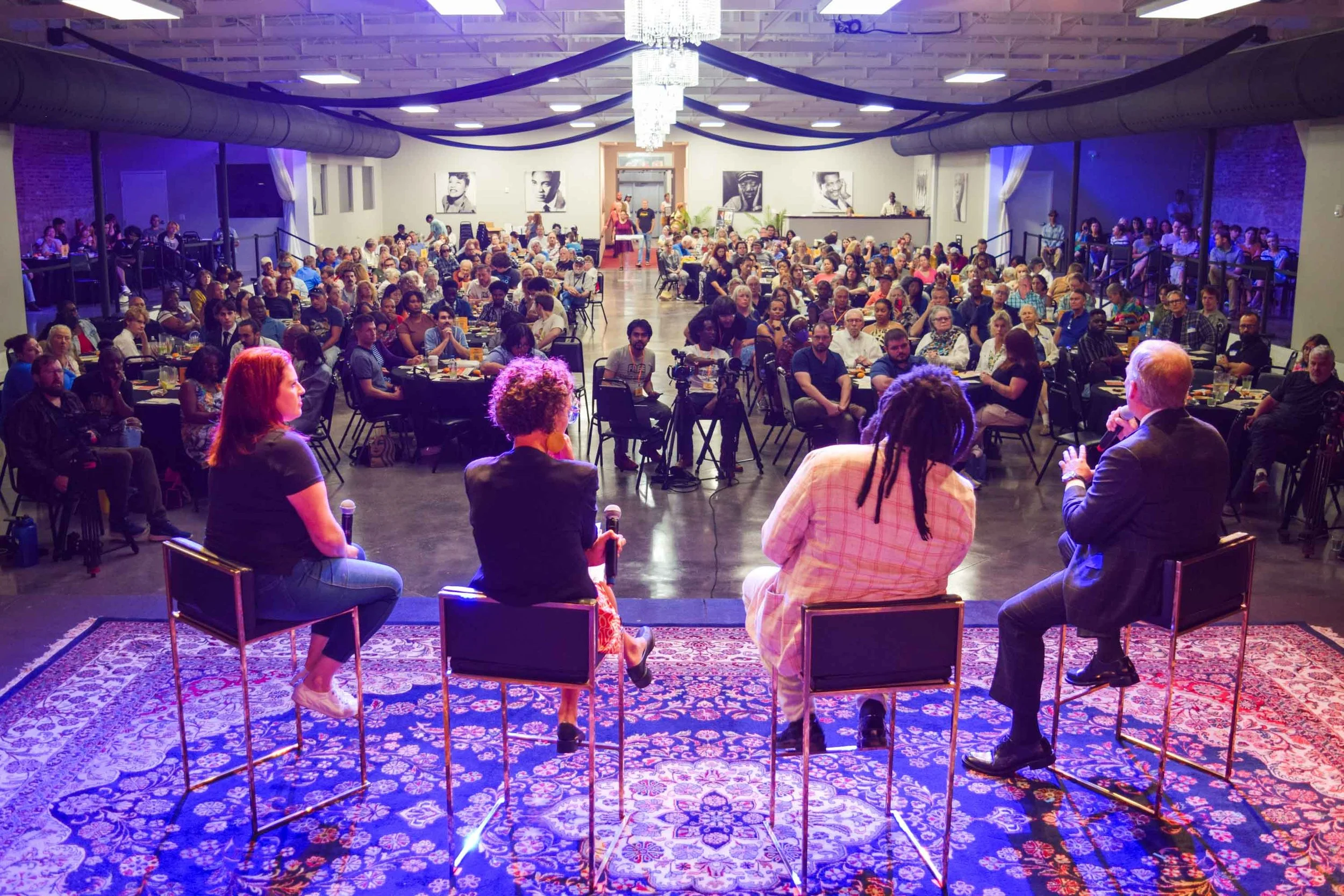
On a Sunday evening in August, several hundred people filled the Historic Big 10 Ballroom on East Apache Street. They came for dinner, for live jazz from the Bishop Marsh Quartet, for free childcare, and for a conversation about the billion-dollar data center going up a few miles away.
The Forum for Real Economic Emancipation brought together six people who approach this question from very different places: a state legislator who spent a year studying it at the Capitol, a former U.S. Congressman who now runs a national AI policy organization, a technology journalist who covers the money behind the build-out, and two Oklahomans who found out a data center was coming to their neighborhood the way most people find out. Late.
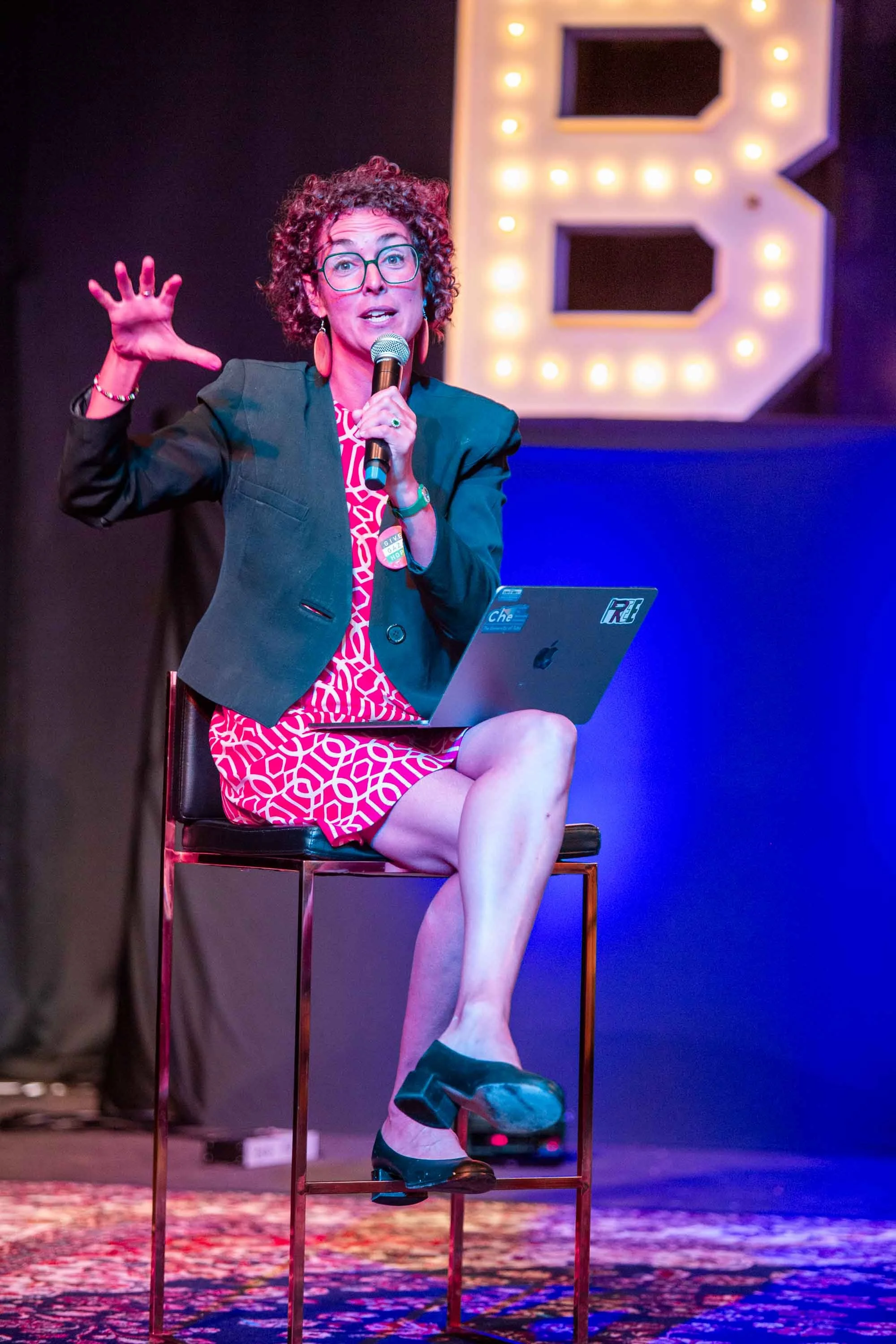
Economist Clara Mattei moderated. Comedian Duke Durant hosted. Poet Sage closed the first half with a piece written for the night.
They disagreed about plenty. That was the point.
WATCH THE FULL CONVERSATION
Meta's Project Anthem, a $1 billion hyperscale data center, had been under construction in east Tulsa since April. The Tulsa City Council had passed a nine-month moratorium on new data center permits while the city studied the impacts. And Oklahoma's Data Center Consumer Ratepayer Protection Act had taken effect on July 1, with the state's two largest utilities in active proceedings before the Corporation Commission to write the rules.
Across the country, more than 5,400 data centers were already operating, with Google, Microsoft, and Amazon expected to invest over a trillion dollars in more.
The rules for who pays were being written while the room talked.
THE NEIGHBORS FIRST
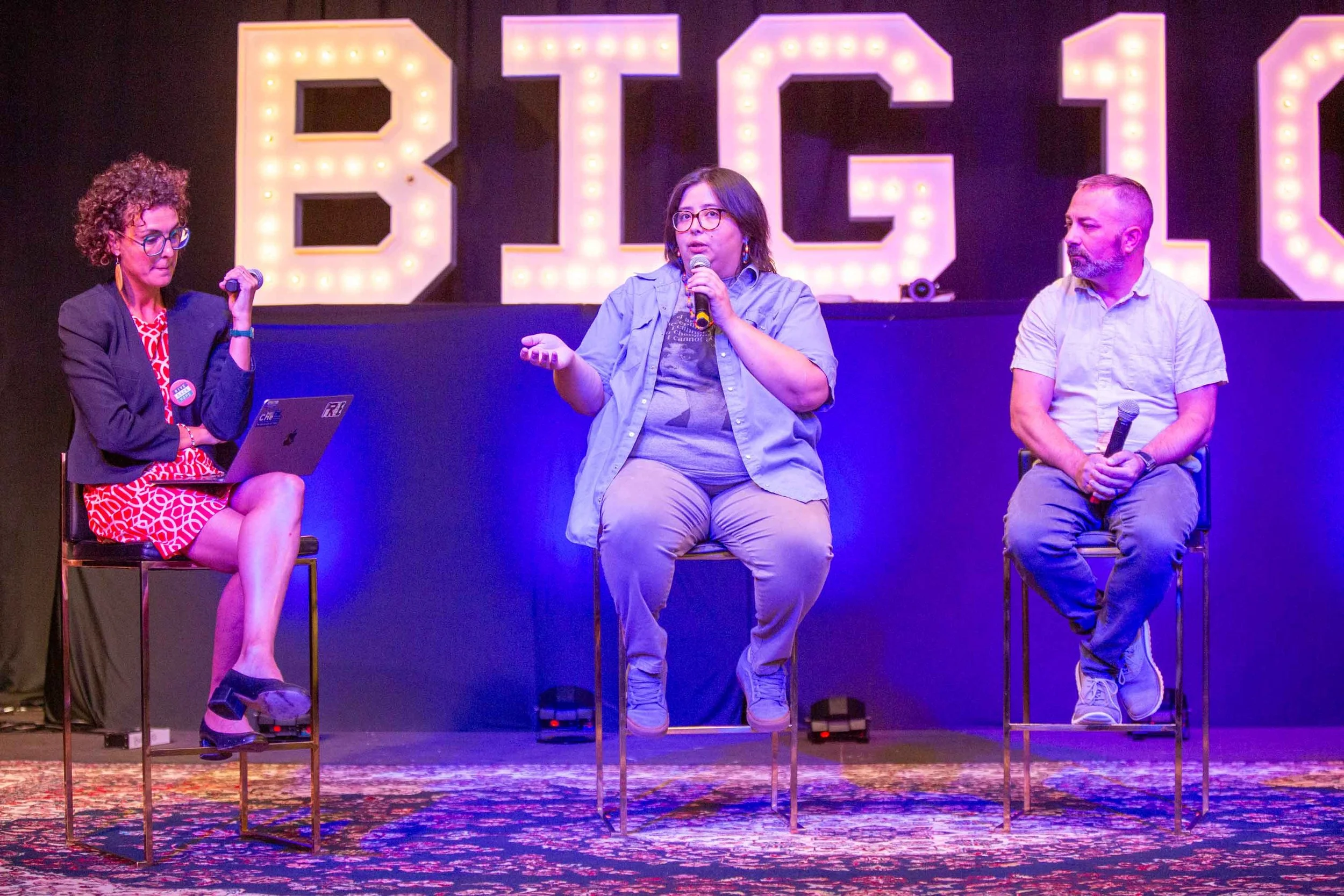
"When we talk about techno colonialism or data colonialism, we have to remember the root of what colonialism is. Colonialism is extraction. Colonialism has a history, and this is just another iteration of how we're seeing that." — Cheyenna Morgan, Stop Data Colonialism
Cheyenna Morgan is coalitional coordinator of Stop Data Colonialism, a national frontline Indigenous group, and a citizen of the United Keetoowah Band of Cherokee Indians with Oglala Lakota heritage. She lives less than three miles from Project Anthem.
She walked the room through the environmental math the glossy announcements leave out. Closed-loop cooling systems get treated with biocides and glycol, chemicals that stay in the water cycle permanently. The water eventually gets flushed, a process called blowdown, into retention ponds or treatment plants that lack the technology to filter those chemicals out. From there it reaches the creeks. Large facilities create heat islands that can raise temperatures across three to six miles.
She also traced the supply chain outward: the specialized chips these facilities run on require minerals from places like Congo and Sudan, and the nuclear renaissance being proposed to power them depends on mining that has historically landed on Indigenous communities, including twice in Oklahoma.
"We have to remember that regulations are often reactive, not proactive." — Cheyenna Morgan
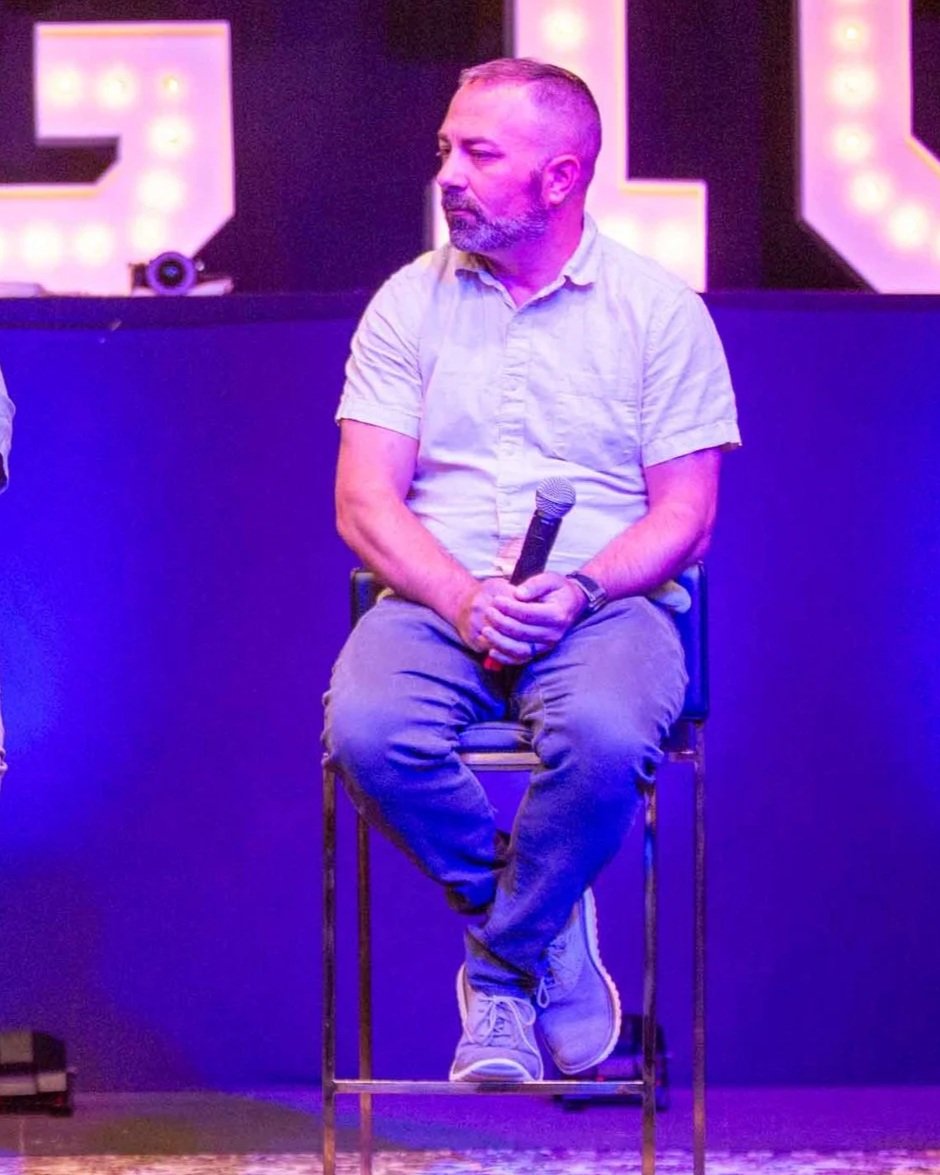
"The entire reason we bought land out there was to get away from the city, to get away from industry, be able to see the stars at night and hear the coyotes and have that peace and quiet."
— Kyle Schmidt, Protect Sand Springs Alliance
Sand Springs now has three separate lawsuits running. The land sale went through and Google owns the property. Kyle's group has spent $80,000 in legal fees before the real fight has started.
His diagnosis went past the buildings.
Kyle Schmidt founded Protect Sand Springs Alliance in November 2025, after a surprise rezoning notice proposed dropping a data center six miles north of town, in the middle of homes, ranches, and farms. He works in flooring sales. He built a tool called MuniWatch that lets citizens track what their local government is doing. He now consults with communities across the country.
"The data centers are not necessarily the problem. They are a symptom of the problem, and that problem being that a lot of us have gone complacent. Everything's good until it's not. Until a big yellow rezoning sign goes up next door to you."
— Kyle Schmidt
He described the mechanism that keeps communities in the dark: non-disclosure agreements that bind city councils, leaving volunteer officials with no comprehensive land planning experience unable to seek outside expert advice while negotiating against the largest companies on earth.
And he gave the room homework. Check your city council meeting minutes. Check the agendas. Watch planning and rezoning. Look at land records for large purchases. Get ahead of the secrecy.
She can name the exact moment this became her issue: a Tulsa World headline in November 2024.
"As children, we're all taught wants and needs. I wanted a Barbie every time I went to Walmart with my mom when I was a kid, but I was told I didn't need one. And so I think there is this massive lie that we need more electricity when truly it's a want, so that tech billionaires can become tech trillionaires." — Rep. Amanda Clinton
She co-authored the Data Center Ratepayer Protection Act with a Republican colleague after letting her own similar bill go, because his could move further. She wants it to go further still.
"I didn't ask for AI to be incorporated into my phone. I did not ask AI to be part of every internet search. I did not ask for AI to be incorporated into my email. I did not ask for these things." — Rep. Amanda Clinton
Later she connected the data itself to compensation. Our information has been scraped from the internet for thirty years to train these systems. In the old days a company that wanted your preferences had to ask, and often paid you for the survey.
"Our data is their currency." — Rep. Amanda Clinton
Rep. Amanda Clinton represents Tulsa's District 71 in the Oklahoma House. She is a citizen of the Cherokee Nation who grew up on a cattle farm at the end of a dirt road in Mayes County, drinking well water. She convened the Legislature's 2025 interim study on data centers and their impact on power and water.
"It said East Tulsa data center set to use 1 billion gallons of water a year, and I thought, wow, I'm not an expert, but 1 billion gallons of water a year sounds like a lot. And it is a lot. It's about the amount of water, roughly, that suburbs like Owasso and Jenks will use." — Rep. Amanda Clinton, Oklahoma House District 71
Her study surfaced a structural problem. These decisions get made in suburban and rural communities by volunteer city councilors and volunteer mayors who may share a city attorney with five other towns, sitting across the table from Google.
On jobs, she cited the Department of Commerce: roughly 9.2 full-time employees per building, with most campuses running four to six buildings. Under 100 permanent positions.
Then electricity took over from water as her central concern. PSO's own rate increase filings name data centers and large industrial users as the reason. Their largest customer ever required 130 megawatts, roughly what it takes to power Broken Arrow. They now hold letters of agreement with at least eleven companies needing 50 megawatts or more, and one needing a full gigawatt.

"How can we get people reliant, dependent on, or committed to this American tech stack?" — Edward Ongweso Jr.
He described the full chain that word covers: the data centers, the minerals, the models, the companies, the asset managers, the financiers supplying the capital.
He also traced how a critique can get absorbed. Around 2019, the strongest argument against biometric surveillance centered on racial bias, since the systems misidentified Black and brown faces and sent people to jail. Companies answered by scanning tens of thousands of Black and brown homeless people's faces in exchange for gift cards, improving accuracy, and leaving the critique weaker than it started.
His warning for the data center movement follows from that. The water and electricity arguments will eventually get engineered away. The question underneath them survives.
"With the moratorium fights and some of the data center activism, these are exciting developments because these are rehearsals for these sort of larger fights." — Edward Ongweso Jr.
Edward Ongweso Jr. is a Brooklyn-based writer and editor covering technology, labor, and finance. He is a senior researcher at Security in Context, finance editor at Logic(s), co-host of the podcast This Machine Kills, and author of the newsletter The Tech Bubble.
He widened the frame from Tulsa to the global map, tracing why so much of this infrastructure is going up in the Persian Gulf. Oil monarchies hold enormous capital and a closing window: hydrocarbon revenues are extraordinary now, and the world will eventually transition away from them. Building AI infrastructure converts today's geopolitical position into tomorrow's.
"What kind of AI do we actually want? What kind of artificial intelligence do we not want? What kind do we want, and how do we ensure that we can pursue that?" — Edward Ongweso Jr.
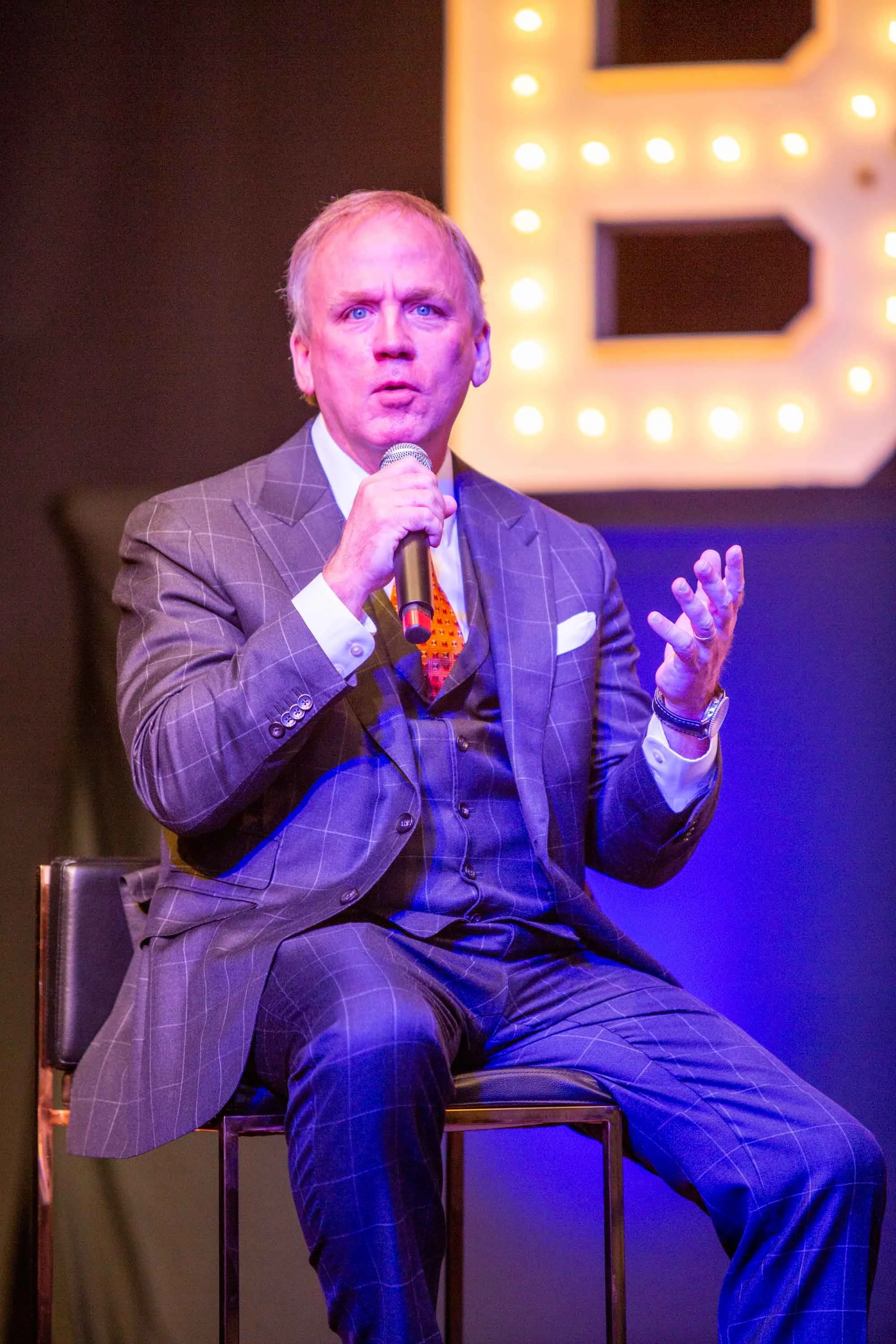
"It's not deterministic that AI develops in this particular way, or that we have a data center in Claremore or Sand Springs. We've put whole technologies back in the box before." — Brad Carson, Americans for Responsible Innovation
He pointed to the Oklahoma Corporation Commission, obscure to most voters and holding enormous power over what you pay. Three elected seats. The planned build-out in this state runs three to four gigawatts over the next six or seven years, the equivalent of three or four large nuclear reactors.
Then he gave the room the number that reframed the whole conversation.
Brad Carson is co-founder and president of Americans for Responsible Innovation. He represented Oklahoma's Second District in Congress, served as Under Secretary of the Army and Acting Under Secretary of Defense for Personnel and Readiness, and led the University of Tulsa as its president. He is a citizen of the Cherokee Nation.
He came at it as someone who sits in the rooms where these decisions get made, and who argues the technology itself is remarkable. He also argued the terms Oklahoma accepts are a choice.
"If you go to other states, some states get 20 or 30 dollars per square foot of a data center. In Oklahoma, we get four to five dollars a square foot. If you want to measure by megawatt, we get five to ten dollars per megawatt being built out. Some places are getting 100 to 200 dollars per megawatt." — Brad Carson
His closing argument pushed past the buildings entirely. The water problems will get solved. The electricity problems will get solved. Hyperscalers will build their own power plants behind the meter and pay for the power they generate, as they already do in more progressive states.
"Take the energy in this room that may be here because of a data center in your community, and that is important. But don't forget that once the data center's solved, or once we've lost that fight or won it, that we have a bigger fight at hand. Technology is transforming the world around us, in maybe some good ways, maybe some bad ways. It's ambivalent, and we need to make sure we get it working for us. And that only happens through activism like this in the room. So get after it." — Brad Carson
"We have a voice, but it's only if we come together and unite and organize collectively that this voice can be heard, and we can have impact that is both local and global." — Clara Mattei
She closed on the question she wanted the room carrying out the door.
"Why have we delegated the most important decisions about our existence, about our material conditions, to by now very few private investors? If we don't start problematizing the issue of ownership, we won't be able to be as creative as I think this historical moment requires." — Clara Mattei
Clara spent the evening pulling the local fight toward the structural one. Private investment follows the expectation of profit, which is the engine of the economic system. What drops out of that calculation is often what communities care about most: ecological sustainability, water that stays drinkable, a place people can afford to keep living.
"Technology is not neutral. It's not about being against technology. It's about being against technology embedded in an economic system that operates according to directions that are not necessarily the direction the majority would like, because they are driven by the logic of profit that is very detached from our needs." — Clara Mattei, economist and president of FREE